The Hollow Earth Files — 5-Part Investigation
Somewhere in a filing cabinet, or by now a cloud folder, sits one of the stranger travel brochures ever printed: an offer of berths aboard a Russian nuclear icebreaker, roughly twenty thousand dollars a head, for a voyage from Murmansk to the North Polar opening — coordinates supplied — and onward, down the curve of the rim, into the inner earth. The itinerary promised the river Hiddekel, the city of Jehu, and a meeting with inhabitants of the interior. The expedition was announced in the mid-2000s. It has been about to depart ever since.
Part 4 of this series ended with the file closed: the planet has been weighed, spun, rung like a bell, X-rayed by earthquakes and satellites and ghost particles, and found magnificently full. By the logic of evidence, the story should end there. It does not, and everyone reading this in 2026 knows it does not. By any measure of attention — search traffic, video views, book sales, cruise deposits — the hollow earth commands a larger audience today than at any point since Captain Symmes was lecturing in courthouses. The finale of the Hollow Earth Files is therefore not about rocks. It is about people: who actually believes this now, what precisely they claim, how the belief is manufactured and distributed in the platform age, and why an idea can outlive its evidence by a century and a half. As throughout this series, the rule stands — sincerity gets respect, and claims get sourced.
The Voyage That Never Sails
The icebreaker story deserves telling in full, because it is the purest modern descendant of Symmes's 1818 circular. Its intellectual author is Rodney Cluff, a genial American author whose self-published book and long-running website argue the classic geography: openings at both poles, an interior sun, and an inner civilization — with the northern entrance calculated to a specific point in the Arctic Ocean. In 2005 a Utah expedition outfitter named Steve Currey turned the coordinates into a product: a chartered voyage aboard the icebreaker Yamal, marketed as a scientific expedition that would settle the question by sailing there. Deposits were invited. Then, in the summer of 2006, weeks after being diagnosed with brain cancer, Currey died. The venture was taken over by a new leader, Brooks Agnew, rebranded the North Pole Inner Earth Expedition, and scheduled for 2008 — then 2009, then later still, as funding documentaries and sponsors came and went. In 2013 Agnew departed the project. The ship has never left port under any flag of the inner world, and the expedition's page has spent two decades in the future tense.
It is easy to smirk, and this series declines to. The pattern is the interesting thing, and it is two centuries old. Symmes died in 1829 still petitioning for ships; his successors got the ships, watched the ships find a continent instead of a doorway, and adjusted. The modern expedition simply automates the cycle: the voyage that would settle everything remains perpetually imminent, and its imminence — not its departure — is the product. A departed expedition can fail. An imminent one cannot.
The Expedition That Actually Went
Because here is the control experiment, and hollow earth history, to its credit, ran it once. In the late 1960s an Argentine-Hungarian adventurer named Juan Moricz announced he had found, in the Cueva de los Tayos cave system of Ecuador, tunnels of impossible workmanship and a library of engraved metal plates — the archive of a lost civilization. Erich von Däniken carried the claim to millions in his 1972 bestseller The Gold of the Gods, describing the tunnels as though he had walked them; pressed later, he conceded he had dramatized. And then something remarkable happened: a real expedition actually went. In 1976, a British-Ecuadorian venture involving more than a hundred soldiers, scientists, and cavers — with Neil Armstrong, the first man on the moon, as its honorary president and an active participant underground — surveyed the Tayos caves in earnest.
They found a genuinely spectacular cave system, real zoology, real archaeology — a burial site, artifacts, wonders enough for any honest lifetime. They found no worked tunnels and no metal library. Moricz, invited to lead investigators to the true chamber, declined; the real entrance, the story went thereafter, was elsewhere, known to initiates. Belief in the metal library is alive and fundraising today. Hold the two expeditions side by side and the mechanism is complete: the voyage that never departs sustains belief by imminence, and the voyage that departed sustains it by relocation. Heads, the kingdom wins; tails, the kingdom moves.
The Cities Move Indoors
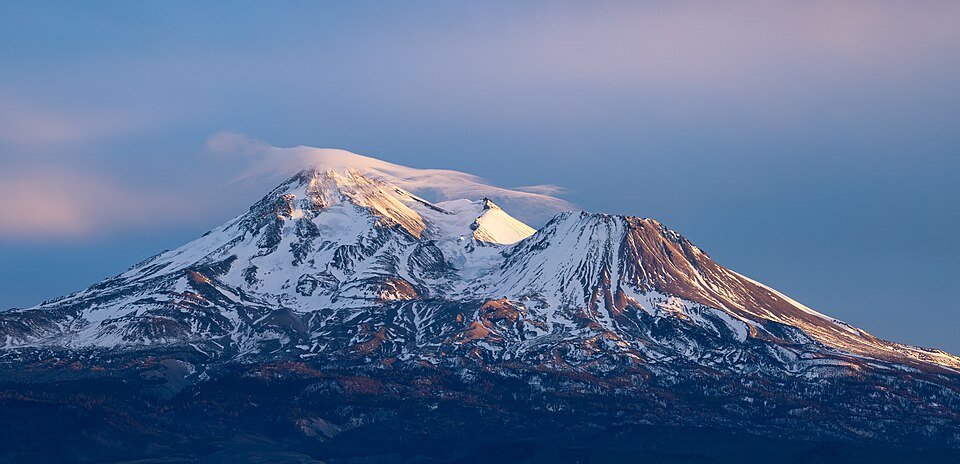
While the explorers circled, the kingdom itself migrated — from geography to channel. The modern capital of the inner world is Telos, the Lemurian city said to lie beneath Mount Shasta, and its literature is a direct continuation of the lineage this series traced in Part 2: Blavatsky's hidden Masters, Ballard's mountain encounter of 1930, and, from the 1990s onward, a library of channeled communications. The doctrine, as the books themselves relate it, runs like this: some twelve thousand years ago, as the continent of Lemuria fell in its final war with Atlantis, survivors withdrew into prepared chambers beneath the mountain, where their descendants inhabit a five-leveled city of more than a million souls, governed by councils of ascended beings and connected — by tunnel and by light-rail, the texts specify — to a planet-wide confederation the literature calls the Agartha Network, upwards of a hundred subterranean cities awaiting the surface world's spiritual readiness. Note the sourcing lineage: the network's very name descends, by way of a century of borrowings this series has traced page by page, from the Paris print shop of 1886.
The canon's principal texts arrived in the 1990s and 2000s. Aurelia Louise Jones's Telos trilogy relays the teachings of Adama, high priest of the subterranean city; Dianne Robbins's books extend the network to Catharia and the vast Library of Porthologos within the hollow interior; a woman known as Sharula Dux has for decades presented herself, publicly and by her own account, as a princess of Telos born in 1725. Around the mountain itself, the myth supports a visible economy of crystal shops, vortex tours, and pilgrimage — the kingdom below as a driver of retail above.
The genre has its cautionary ancestor. In the 1950s a mysterious Tibetan lama named T. Lobsang Rampa sold millions of books before investigators identified him as Cyril Hoskin, a plumber's son from Devon who had never been east of the Channel; his later volumes, undeterred, sent readers into luminous tunnels beneath the Himalayas, and they remain in print. And the kingdom now comes with an atlas: modern believer literature circulates whole gazetteers of entrances — Shasta and the poles, the Gobi and the Potala, Mammoth Cave, the Tayos — a tourist map of the unfalsifiable, in which every cave that has been explored is a decoy and every cave that has not is a door.
The Colonel, the Zeppelin, and Late-Night Radio
Between the channelers and the algorithms stands an older broadcast layer. Part 3 introduced the 1970s International Society for a Complete Earth, the small Missouri outfit that promoted the fabricated Byrd diary and announced a dirigible expedition to the polar opening — the airship, like the icebreaker after it, remaining forever at the hangar door. The same decades produced the testimony circuit: men and women whose accounts of personal visits to the interior toured the lecture halls and, later, the airwaves. A figure presenting himself as a retired Air Force colonel, Billie Faye Woodard, became a fixture of the genre with an account of service at Area 51 and passage to the inner earth — a narrative sustained across decades of interviews without documentation, in the direct tradition of the contactee literature the Byrd diary imitated.
What gave this material national reach was late-night radio. From the 1990s, Art Bell's Coast to Coast AM — syndicated to hundreds of stations and millions of overnight listeners — gave the hollow earth a recurring, courteous hearing alongside its ghosts and abductions. Bell's genius was tonal: no debunking, no endorsement, just open phone lines at 2 a.m. It was, in retrospect, the algorithm before the algorithm — an engine that discovered how large the audience for the unfiltered uncanny really was, and how little it asked in the way of sourcing. When Bell died in 2018, his true heirs were not on the radio at all; they were the mystery podcasts and marathon video streams that had adopted his format wholesale, open lines and open questions, now unbounded by broadcast towers or bedtimes.
Watching a Legend Being Born
Parts 2 and 3 of this series reconstructed myth-formation from archives — tracing, across decades, how a French occult book became a Mongolian prophecy and a publicity phrase became a secret diary. The modern era's gift to investigators is that the same process now happens in public, timestamped, over a long weekend. The laboratory was the winter of 2016, when three unrelated Antarctic items arrived in quick succession: aerial photographs of a strikingly pyramidal peak in the Ellsworth Mountains — a shape glacial erosion produces routinely, but which circulated as "the Antarctic pyramids"; a visit to McMurdo Station by the sitting U.S. Secretary of State, John Kerry, the highest-ranking American official ever to tour the continent, instantly reframed as a dignitary being "briefed at the base"; and the medical evacuation of the eighty-six-year-old astronaut Buzz Aldrin from the South Pole after he fell ill at altitude.
Within days, the three unrelated events had been fused into one story — officials summoned, secrets glimpsed, witnesses silenced — and the story acquired its scripture: a quotation, attributed to Aldrin, that spread across every platform and adorns hollow earth videos to this day.
"We are all in danger. It is evil itself." — Fabricated quotation attributed to Buzz Aldrin, December 2016; Aldrin never said or wrote it
The line originated in a hoax post, was screenshotted out of its context, and completed the passage from joke to testimony in under a week — the same laundering that took The Smoky God a generation and the Byrd diary thirty years, now running at platform speed. Each ingredient had a mundane biography available on request. The pyramidal peak is a textbook glacial horn, carved to facets by converging ice the same way the Matterhorn was, and geologists said so within days. Kerry's itinerary was public. Aldrin's own dispatches from his recovery — altitude sickness, gratitude to the medical teams, undimmed enthusiasm for getting humans to Mars — were published under his real name and traveled a fraction as far as the sentence he never wrote. Fact-checks appeared promptly, circulated modestly, and changed approximately nothing. For a series that has spent four installments dating fabrications by their first appearance in print, 2016 was a controlled demonstration: the joints of a legend, welded live, on camera, with the receipts in everyone's pocket.
The Algorithm Finds the Opening
Which brings us to the machinery. When researchers interviewed attendees at flat earth conventions in the late 2010s, they found a striking uniformity: nearly every convert traced the turn to YouTube — not to searching for flat earth content, but to being recommended it while watching adjacent material about other mysteries and conspiracies. There is no reason to think the neighboring hollow earth cluster works differently; the two theories contradict each other completely and share an audience anyway, because the recommendation graph sorts by appetite, not geometry. The platforms noticed: in 2019 YouTube began demoting what it called borderline content — naming flat earth and miracle cures among its examples — and both company reports and independent audits recorded steep declines in such recommendations, even as the material itself remained a search away. The scene duly migrated: short-form video now carries the load, and dramatic readings of the fabricated Byrd diary, Highjump "footage," and entrance tours of Mount Shasta circulate under hashtags whose counters run to nine figures. The machinery contains one more twist worth naming, because this very series is subject to it: the recommendation engines that sort viewers by topic cannot reliably tell advocacy from autopsy. Watch a careful debunk of the Byrd diary and the system learns only that Byrd-diary content holds your attention; the skeptic and the believer feed the same cluster, and the cluster grows either way. Debunking at scale is not a fire hose aimed at the myth. It is, in the algorithm's bookkeeping, more myth.
Meanwhile, the mainstream stopped needing the fringe to teach it the vocabulary. Edgar Rice Burroughs sent readers to the inner world of Pellucidar in 1914; Hollywood drilled down with Verne in 1959 and again in 2008; Miles Davis titled a monumental 1975 live album Agharta. But nothing in a century matched the reach of the MonsterVerse: three consecutive blockbusters between 2019 and 2024 in which "the Hollow Earth" is not a metaphor but the on-screen setting — gravity inversion, inner sun, ancient civilization, the works — delivered to hundreds of millions of viewers as franchise furniture. Part 2 showed fiction being laboriously laundered into testimony over decades. The platform age has dissolved the distinction: a clip from a monster movie, a channeled message from Telos, and a 1947 newspaper misreading now share a single feed, a single aesthetic, and a single algorithmic category — content about the world below.
The Business of the Underworld
Follow the money, because the money explains the calendar. Symmes toured himself to death and died poor; his modern heirs operate inside a functioning economy. The inner world in 2026 supports expedition deposits held against ever-receding departure dates; documentary projects crowdfunded on the promise of the voyage they will someday film; channeled-message subscriptions, courses, and retreats; the speaking circuit that runs from consciousness expos to cruise-ship conference tracks; and the Shasta pilgrimage trade, where the mountain's hidden city anchors a visible main street. None of this requires bad faith, and this archive alleges none — sincerity and salesmanship have shared a tent since Symmes sold lecture tickets. But notice what the structure rewards. A departed expedition ends, one way or the other; a kingdom contacted on schedule, every month, for subscribers, does not. The perpetual pre-departure state — the imminent voyage, the forthcoming disclosure, the entrance to be revealed at the next conference — is not a failure of the modern hollow earth movement. It is the business model, whatever any individual intends. The nineteenth century's believers spent themselves chasing the opening. The twenty-first century's opening, kept forever just offstage, pays.
Why the Earth Refuses to Fill
So the question this series has been circling can finally be put directly: why does this one survive? Not all dead theories do. Nobody crowdfunds voyages to find phlogiston. Five forces, together, seem to do the work.
The first is the oldest: the hollow earth is the underworld in a lab coat. Nearly every human culture has furnished the space beneath its feet — Hades and Xibalba, Naraka and the realms below Yggdrasil — and a theory that secularizes that architecture inherits its gravity. Every child who ever started digging to China in a backyard has felt the intuition the theory runs on: that down is a direction with a destination. The idea does not have to be learned; it only has to be permitted. The second force is bundling. Scholars of conspiracy culture describe a commons of "stigmatized knowledge" in which rejected claims certify one another — and the hollow earth is the great connector, linking Atlantis to the UFOs to the secret Nazi history to the coming spiritual ascension in a single geography. Believers rarely hold it alone; it is load-bearing wall in a larger house, and you cannot remove it with a physics lecture any more than you can remove a wall with one.
The third force this series has watched operate for five installments: the retreat that never concludes. Halley's spheres retreated from the compass data to the aurora; Symmes's opening retreated beyond each new latitude reached; the kingdom retreated from geography into the astral; Byrd's flight retreated into sealed records; the Tayos library retreated to an entrance only initiates know; the polar hole retreated from the satellite mosaic into claims of editing. Name the instrument, and the believer names the place the instrument has not quite been. The opening is always exactly one expedition away — and Part 4's falsifiability list showed the asymmetry in full: science can state precisely what would prove the earth hollow, while the belief, in practice, can no longer state what would prove it full. That asymmetry is not a debating trick. It is the diagnosis.
The fourth force is context, and it deserves a level voice. The hollow earth's modern boom rides a broader collapse of default trust in institutions — a collapse with genuine causes, since governments and industries have, at documented intervals, concealed surveillance programs, buried unfavorable science, and managed truths they found inconvenient. A public that has learned, correctly, that official maps sometimes omit things is primed to ask what else the mapmakers left out. The conspiracy literature's move is to convert that reasonable question into an unreasonable rule: whatever is denied is therefore true. This series has tried to model the alternative — treating every official account as checkable rather than either sacred or false, and letting provenance, not authority, decide. The believer and the archivist begin at the same doorstep of doubt. They part at the filing cabinet.
The fifth force is the one that deserves sympathy rather than analysis: wonder, underserved. The hollow earth offers what the disenchanted map of the world seems to withhold — a frontier within walking distance, a secret with your name on it, the possibility that the boring given world is a lobby. Part 4 argued the real interior out-stranges the fake one: continents of anomaly at the mantle's base, metal weather, a core within the core. But the real version arrives without a doorway, and the doorway was always the point. People do not believe in the hollow earth because they have weighed the seismic evidence and found it wanting. They believe because a world with a hidden inside is a better story to live in — and until the true story is told with equal appetite for awe, the tunnel will stay open for business.
The Series Ledger
Three hundred and thirty-four years, then, from a Royal Society paper to a nine-figure hashtag. An astronomer with honest data emptied the planet to explain a compass. A wounded captain pledged his life to the emptiness and died petitioning for ships. A Paris occultist invented its population, destroyed the evidence, and was plagiarized into scripture. A prophet measured a Florida beach and found his own instrument's sag. An admiral's press clipping was rewritten into a deathbed confession; a whaling survey became a fortress of the undead Reich; and all the while the instruments — the torsion balance, the pendulum in the mine, the ringing planet, the satellites, the ghost particles — returned the same verdict in ascending detail: full, layered, stranger than requested. The believers answered each verdict the same way, by moving the door. That is the whole history, and this archive submits that it is more interesting than the theory it explains: not a story about the earth at all, but a documented, datable, five-part case study in how an idea learns to survive its own disproof.
The Unexplained Archive pushes no conclusions about mysteries, and the hollow earth files close the way they opened — with documents. Every claim in this series has a first appearance, an author, and a paper trail; readers are invited, as always, to pull the sources below and check the joints themselves. That toolkit — who said it first, citing what, verifiable where — is the only equipment this site brings to any locked room, and the hollow earth has been its longest field test.
As for the ending, there are two, and the reader may choose. In one, the departure page of the North Pole Inner Earth Expedition is updated again this year, as it has been for two decades, and the icebreaker remains at her moorings, eternally provisioning: the opening, as ever, exactly one voyage away. In the other, in a small park in Hamilton, Ohio, the monument a son raised in 1829 still stands — a weathered stone globe, pierced open at the poles, over the grave of a man who pledged his life to the world inside and never saw it. Visitors still come. Some come for the history. Some, unmistakably, come for the hole. The earth beneath both of them has been weighed, rung, and read to its center, and found full beyond any argument. The hollow endures anyway — not in the planet, but in the map of human wishes, at the coordinates every legend in this archive shares: the border between what is true and what would be wonderful.
Sources & Further Reading
- Cluff, Rodney. World Top Secret: Our Earth Is Hollow! Self-published, 1998; with North Pole Inner Earth Expedition materials, Currey Expeditions charter announcements (2005–06), and successor project documents under Brooks Agnew (2007–2013).
- von Däniken, Erich. The Gold of the Gods. Souvenir Press, 1972; with Hall, Stan, records of the 1976 British-Ecuadorian Los Tayos expedition (honorary president Neil Armstrong).
- Jones, Aurelia Louise. Telos, Vols. 1–3. Mount Shasta Light Publishing, 2004–2006.
- Robbins, Dianne. Messages from the Hollow Earth. 2003.
- Rampa, T. Lobsang [Cyril Hoskin]. The Third Eye. Secker & Warburg, 1956; with the 1958 press investigations identifying the author.
- Coast to Coast AM broadcast archives, hollow earth programs, 1990s–2000s (Art Bell, host).
- Associated Press and Snopes fact-check records on the fabricated Buzz Aldrin quotation, December 2016; with contemporaneous reporting on the Ellsworth Mountains "pyramid" photographs and Secretary of State John Kerry's November 2016 McMurdo visit.
- Landrum, Asheley R.; Olshansky, Alex; and Richards, Othello. "Differential susceptibility to misleading flat earth arguments on YouTube." Media Psychology, Vol. 24 (2021).
- YouTube Official Blog. "Continuing our work to improve recommendations on YouTube." January 25, 2019.
- Barkun, Michael. A Culture of Conspiracy: Apocalyptic Visions in Contemporary America. University of California Press, 2003.
- Ward, Charlotte, and Voas, David. "The Emergence of Conspirituality." Journal of Contemporary Religion, Vol. 26 (2011).
- Dickey, Colin. The Unidentified: Mythical Monsters, Alien Encounters, and Our Obsession with the Unexplained. Viking, 2020.
- Standish, David. Hollow Earth. Da Capo Press, 2006; Godwin, Joscelyn. Arktos: The Polar Myth. Thames & Hudson, 1993.
- Burroughs, Edgar Rice. At the Earth's Core. 1914; Journey to the Center of the Earth (films, 1959 and 2008); Godzilla: King of the Monsters, Godzilla vs. Kong, and Godzilla x Kong: The New Empire. Legendary Pictures, 2019–2024.
- Davis, Miles. Agharta. Columbia Records, 1975 (recorded live, Osaka, February 1, 1975).